Most testimonial videos fail in the same way. A satisfied client sits down, a camera starts recording, and the person who praised your work over lunch last month starts sounding like they are reading a brochure. The praise is real. The delivery kills it.
A corporate testimonial video is worth doing because buyers trust other buyers more than they trust your sales pages. But the value only survives if the client sounds like a person. Getting that result is mostly preparation. It starts weeks before the shoot, with how you ask, who you ask, and what you promise them about the process. For the service itself, see our testimonial and documentary Video Production page.
Ask the Right Client, the Right Way
The best testimonial subject is not always your biggest client. It is the client who can describe a specific problem, a specific decision, and what changed in their daily work afterward. Size impresses nobody if the answers stay vague.
Ask in person or by phone, not by a long email that reads like a legal request. Keep the ask short. Explain where the video will appear, how long the recording takes, and that the client sees the finished edit before anything is published. That last point decides many yeses. Senior people protect their reputation. Approval rights, stated up front, remove the risk that keeps them from agreeing.
Timing matters too. Ask soon after a project lands well, while the details are still fresh. A client asked six months later remembers that things went fine. A client asked two weeks later remembers the exact week your work solved their problem, and details are what make a testimonial believable. The same principle applies in operations work, where a facility leader speaking on camera carries weight that a written quote never will. Our post on Video Production for logistics companies covers how that trust works in an industrial setting.
Prepare the Person, Not a Script
Never hand a client a script. Scripted answers are the main reason testimonial videos sound stiff, and viewers can tell within ten seconds.
Prepare talking points instead. Send three or four questions in advance so the client can think about them. Good questions ask for a story, not a rating:
- What was the situation before you brought us in?
- What made you choose us over the other options?
- What does the work actually look like day to day?
- What would you tell someone in your position who is deciding?
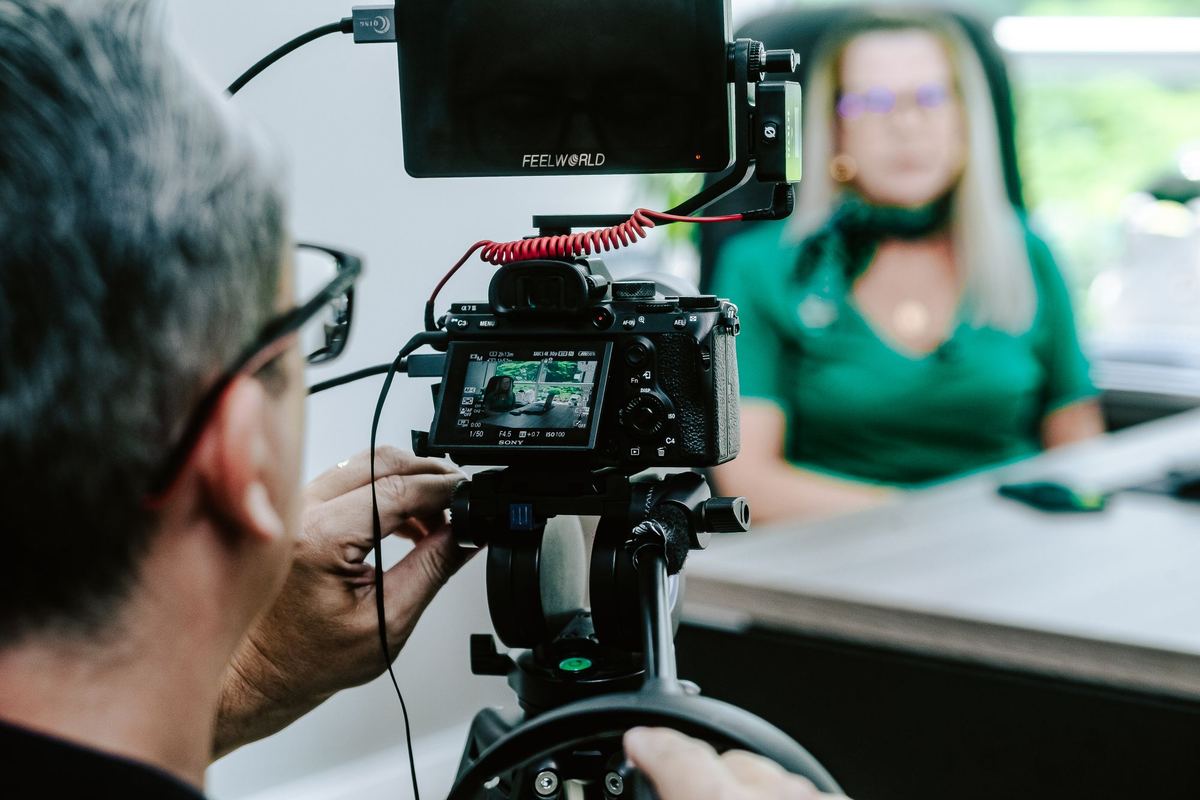
On the day, a good interviewer treats the recording as a conversation. The camera operator should not be the one asking questions if that splits attention. One person leads the conversation. The client answers that person, not the lens. If an answer trails off or turns into a list of adjectives, the interviewer goes back and asks for the example behind it. Specific beats polished, every time. This is also why the people behind the camera matter, a point we covered in the creative background behind Red Passage.

Specific beats polished, every time.
Record More Than the Interview
An interview alone, cut against a plain wall, wastes half the value of the shoot. While you have access, record the client in their own working space. Show the facility, the product, the team using what your company delivered. Viewers judge credibility with their eyes. A warehouse director standing in the warehouse he is describing is believable in a way a talking head is not.
This supporting footage also protects the edit. Long answers can be shortened without visible jumps, because the picture can cut away to the operation while the voice continues. Plan the day so the interview happens first and the working footage follows, while the client is still available for a short pick up line if the edit needs one. If the testimonial is part of a larger piece, such as a company film, our corporate brand storytelling Video Production page explains how the parts fit together.
Put the Video Where Buyers Decide
A testimonial buried on a testimonials page does very little work. Place testimonial video at the points where a buyer is deciding:
- On the service page the client is describing, next to the offer itself.
- In proposals and follow up emails after a first meeting.
- On the corporate and B2B Video Production style pages where buyers compare providers.
- At events and presentations, where a client voice breaks up your own claims.
Keep lengths honest. A two minute cut carries the full story for a website. A thirty second cut carries one strong point for social channels and sales emails. Both come from the same interview if the questions were planned well. Agree the delivery dates before the shoot, especially if the video supports a launch or a proposal deadline. Our post on 24 hour Video Production explains what fast turnaround actually requires from both sides.
What to Do When a Client Says No
Some clients cannot appear. Company policy, legal review, or a publicity rule may block them. Accept it quickly and ask for the next best thing: a written quote you can publish with their name and title, or an introduction to another client who can appear. A no handled well often produces a better yes somewhere else.
And if a recording goes badly, do not publish a weak testimonial to justify the shoot day. One stiff, vague video does more harm than none. Reshoot with better preparation, or use the written quote and move on.
Start a Conversation
Red Passage is a Georgia based visual communications studio in Newnan. We produce commercial Video Production and photography for organizations that need their work believed, not just described. If a client story is the strongest proof your company has, record it properly. Start a Conversation and tell us whose voice your buyers need to hear.